
Vol. 8, No. 96, February 3, 2026
In This Issue…
- Annual General Meeting (AGM) Announcement
- President’s Message
- After 80+ years, 7 Nisei veterans receive earned commissions
- JAVA hosts Hawaiʻi veterans and community leaders
- Kyle’s essay about Ken Akune
- JAVA by-laws revisions and membership input
- Freedom Walk 2026
- Day of Affirmation sneak preview and seeking support
- 2025 Tax Donation Letters
- Upcoming JAVA Events
Annual General Meeting Announcement
Dear JAVA Members and Friends,
We’re pleased to invite all members to attend the Japanese American Veterans Association Annual General Meeting (AGM).
This year’s AGM will cover several important updates and conversations shaping the future of JAVA, including:
- Announcement of the General Election winners
- Recognition of our Annual Award recipients
- Discussion of proposed changes to the JAVA Bylaws
- An overview of JAVA’s priorities and plans for the coming year
The AGM is also an open forum for members to share ideas, raise concerns, and engage directly with the JAVA Executive Committee. Your voice matters, and we hope to see increased member participation as we move forward together.
A major highlight for the year ahead will be JAVA’s large Day of Affirmation event. We’ll be sharing more details at the AGM and are actively seeking volunteers and members who want to help make this important event a success.
📅 2026 Annual General Meeting
Date: Saturday, February 7, 2026
Time: 2:00 – 4:00 PM (Eastern Time)
Location: Virtual via Google Meet
Google Meet link:
https://meet.google.com/qpu-bbtj-gwt
All members are welcome to attend. If you would like specific topics addressed during the meeting, or if you’d like to RSVP to receive a Google Calendar notification, please reply to this email or contact us at [email protected].
We look forward to connecting with you and continuing to build a strong, engaged JAVA community.
With respect and appreciation, JAVA Executive Committee
President’s Message
Dear Members and Friends of JAVA,
A Legacy Without Borders
The past two years have marked a turning point for our organization. We aren’t just growing in numbers; we are expanding our footprint across the globe to ensure the story of the Nisei soldier is never forgotten.
Global Recognition and Honor
France: In Bruyères and Biffontaine, the local leadership honored us with medallions, celebrating the enduring bond formed during the liberation in WWII.
Germany: Near Waarkirchen, we helped cement history by authoring the inscription to the monument for the 522nd Field Artillery Battalion, honoring their role in liberating the survivors of the Dachau Death March.
United States: From the “Evening of Aloha” in Los Angeles to posthumous commissioning ceremonies in Hawaiʻi, our presence is felt at every major milestone.
Strength in Unity
We recently gathered with major Nisei-related organizations to forge a new path forward. The consensus was clear: we are stronger when we work together. By supporting one another, we ensure that the values of service and sacrifice remain prominent in the public eye.
“This is just the beginning. Get ready for more!”
The “field” is waiting for you. To make JAVA even more impactful, we need more than just supporters; we need active participants. Whether it is joining our activities or helping lead our next chapter, your involvement is what drives our mission.
Let’s make history together. See you on the field!
In service and with gratitude,
Howard High
President, Japanese American Veterans Association (JAVA)
After 80+ Years, 7 Nisei Veterans Receive Earned Commissions
Honolulu, Hawaiʻi
Written by: Howard High, JAVA President
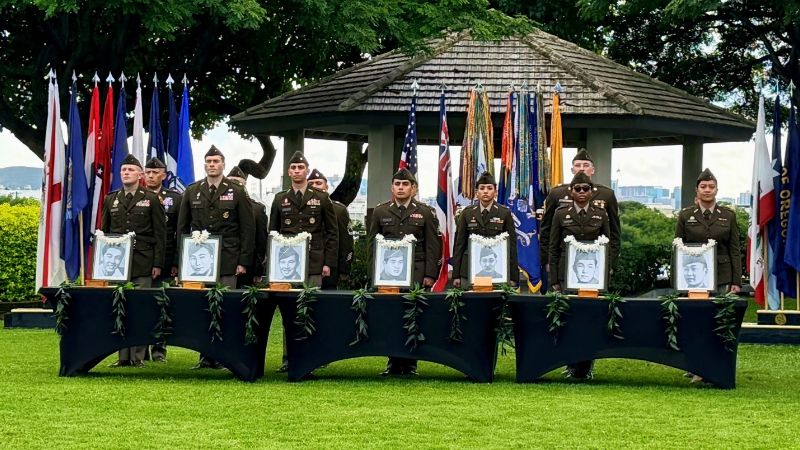
Completing the Commission: Honoring Seven University of Hawaiʻi ROTC Nisei Soldiers
On January 26, 2026, the United States Army Pacific hosted a historic posthumous commissioning ceremony to honor seven World War II Japanese American soldiers who began their service as cadets in the University of Hawaiʻi Army ROTC. The ceremony formally commissioned these men as Second Lieutenants in the United States Army.
The program opened with welcoming remarks delivered on behalf of Ronald P. Clark, the U.S. Army Pacific (USARPAC) Commanding General. The ceremony then moved through familiar elements many of us recognize from military tradition, including the National Anthem and the Hawaiʻi State Song, an invocation by the USARPAC Command Chaplain, and the posting of the colors. UH ROTC cadets and USAR soldiers of the 100th Infantry Battalion/442nd Infantry Regimental formed the color guard.
USARPAC welcomed a cross-section of the Hawaiʻi community and the broader Nisei legacy community. Leaders from the State of Hawaii and the For those among you who have experienced the loss of a parent, and the ritual of looking through the items accumulated over a lifetime (ranging from a beloved chair, an heirloom brooch, and papers documenting the path their lives traveled), you know how this process can be an emotional journey filled with sorrow and joy. A single found letter can provide the details of a challenging moment in your family history, which you might have had some knowledge of, or reveal ties to others whom you were unaware of. A long-forgotten photo can remind you of a personal childhood experience or a story told to you that revealed a moment in your parents’ lives.
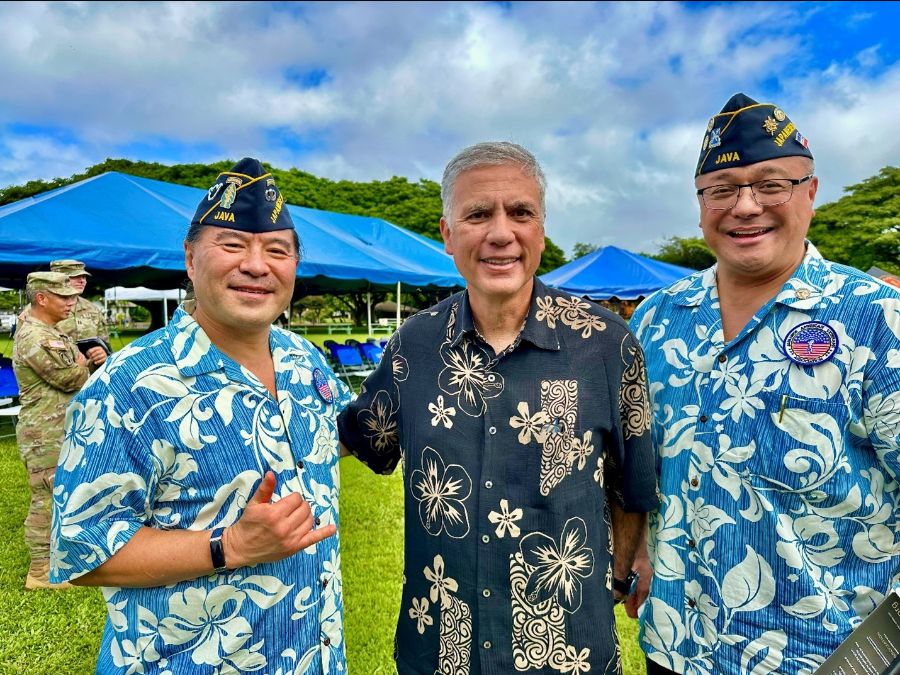
The ceremony also recognized distinguished guests, including General (Ret.) Paul Nakasone, Honorary Chair of the Japanese American Veterans Association (JAVA). During remarks later in the program, General Clark thanked him directly for his presence, service, and mentorship.
What the Army set out to do
War interrupted the cadets’ commissioning path. The Army chose to formally recognize their rightful place as commissioned officers in the U.S. Army.
The program also placed the ceremony in its historical setting. After the attack on Pearl Harbor disrupted their studies and their ROTC trajectory, these cadets continued to serve. They mobilized first through the Hawaii Territorial Guard and then served with the Varsity Victory Volunteers, an organization they helped form, supporting essential Army construction projects across the islands. General Clark described the practical impact of that service, highlighting how their work built critical wartime infrastructure, including roads, bridges, barracks, and ammunition facilities at Schofield Barracks and other locations on Oahu.
UH ROTC carried a unique wartime legacy
A distinction many people outside Hawaii do not know is that the UH ROTC is the only ROTC unit in the nation to have received a battle streamer. The Army awarded the Pearl Harbor Streamer to recognize cadet valor and the unit’s active-duty role during World War II. That history connects the cadets who answered Pearl Harbor with immediate service to the cadets standing in the field during this commissioning ceremony.
JAVA received formal recognition twice during the program
During the ceremony, the announcer mentioned the Japanese American Veterans Association twice. First, the program acknowledged JAVA by name among the organizations and community representatives present. Later, during the commissioning segment, the announcer thanked JAVA publicly for its contributions to the ceremony.
The commissioning segment put Army tradition on display
USARPAC built the commissioning segment around visible symbols that families could see and touch.
The organizers directed everyone’s attention to a “table of honor” that displayed photographs and commissioning certificates for each honoree. UH ROTC cadets then placed gold bars to represent the rank of Second Lieutenant, with a challenge coin of the Warrior Battalion, the Alumni association for the UH ROTC Program.
The program also explained the “first salute” tradition. In that tradition, a noncommissioned officer renders the first salute to a newly commissioned officer. The new officer then presents a silver dollar as a sign of respect and appreciation for the NCO corps and its role in building leaders. In the ceremony, NCOs from U.S. Army Pacific rendered their first salute and retrieved the silver dollar.
The ceremony then moved from symbolism to formal authority. An excerpt from the Secretary of the Army’s order was read. The order stated that, by the authority vested in the Secretary, and in recognition of extraordinary service and sacrifice during World War II, the Army honorably and posthumously promoted the following individuals to the rank of Second Lieutenant, United States Army, effective August 18, 2025:
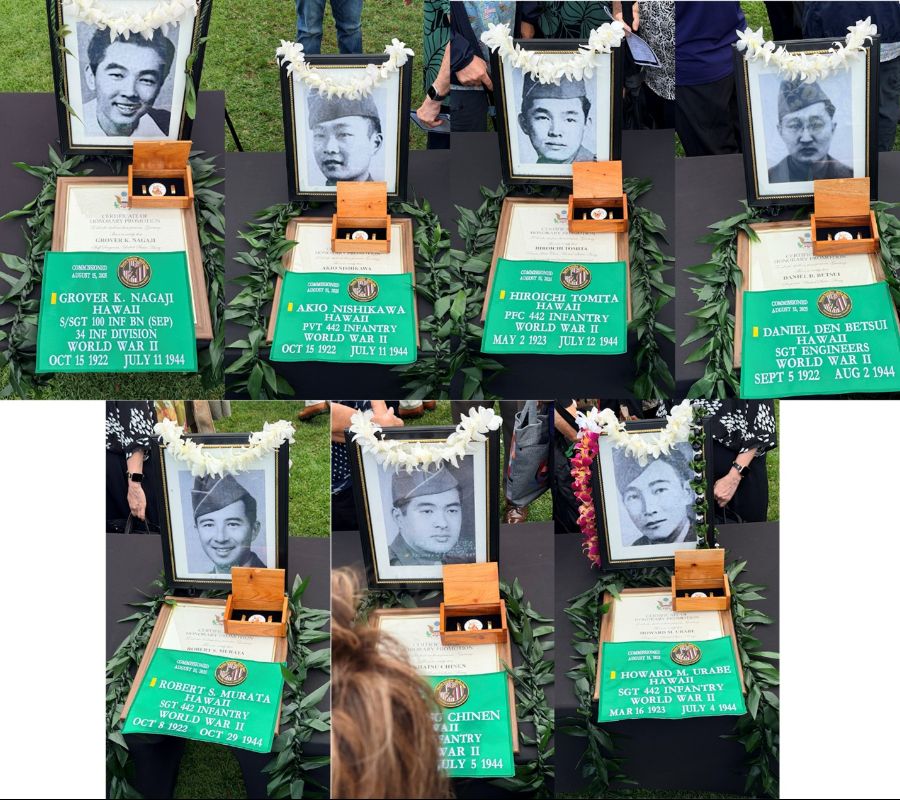
- 2LT Grover Nagaji, 100th Infantry Battalion (Separate), 34th Infantry Division
- 2LT Howard Urabe, 2nd Battalion, 442nd Regimental Combat Team
- 2LT Robert Murata, 3rd Battalion, 442nd Regimental Combat Team
- 2LT Jenhatsu Chinen, 2nd Battalion, 442nd Regimental Combat Team
- 2LT Daniel Betsui, 232nd Combat Engineer Company
- 2LT Hiroichi Tomita, 2nd Battalion, 442nd Regimental Combat Team
- 2LT Akio Nishikawa, Medical Detachment, 442nd Regimental Combat Team
The reading of the orders affirmed their rightful place among the commissioned officers of the U.S. Army. The commissioning is now enshrined in the United States Army’s official records, a key point for families and history.
The ceremony then paused for a moment of silence to honor the seven men and all who made the ultimate sacrifice. To close, the 25th Infantry Division Band played ceremonial music, including the 442nd Regimental song. The program then invited families to join General Clark at the center of the field.
JAVA’s presence and a gift of remembrance
JAVA provided family members with embroidered commemorative grave marker covers for the graves of the seven newly promoted Nisei soldiers.
Four members of JAVA’s Executive Council attended the event:
- Howard High, President (Maryland)
- Lynn Mariano (Hawaiʻi)
- Mark Nakagawa (Virginia)
- David Iwata (California)
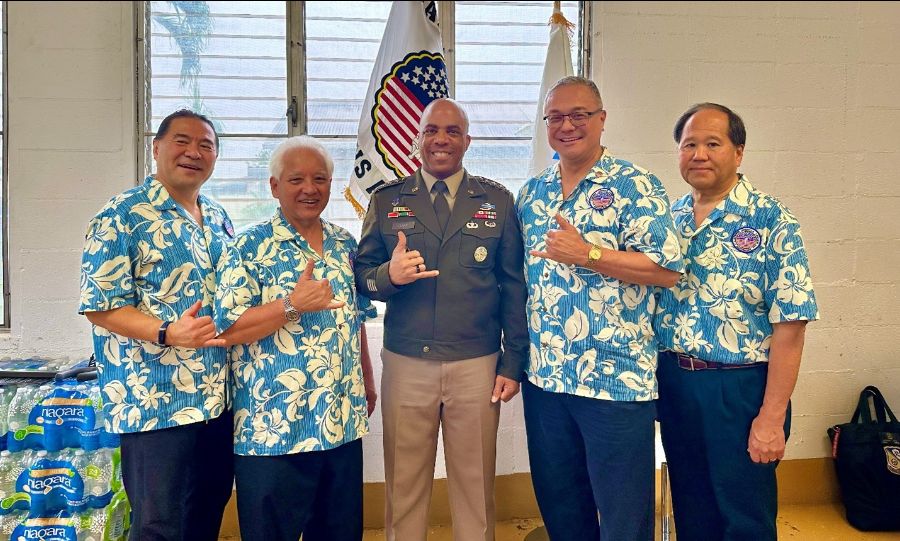
JAVA attended this ceremony for several reasons. We honor service. We support military families. We protect the record. USARPAC and UH ROTC gave these seven men the recognition that was delayed by war, overshadowing subsequent events.
The Army placed their names where they always belonged, in the commissioned ranks, preserved in the official record, and carried forward by the next generation of cadets and leaders. This is the purpose of JAVA: to bring the legacy of the past into the present, shaping the future.
JAVA Hosts Strategic Planning Dinner with Hawaiʻi Veterans and Community Leaders
Honolulu, Hawaiʻi
Written by: Lynn Mariano, JAVA HI Regional Representative
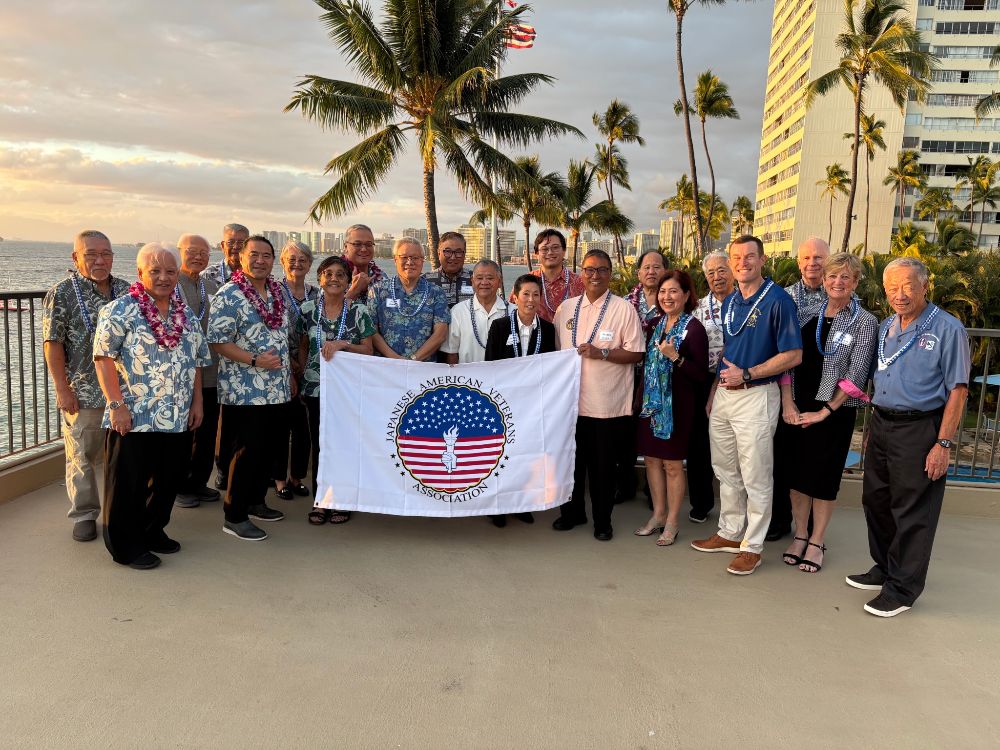
| On January 27, 2026, the Japanese American Veterans Association (JAVA) hosted a strategic planning dinner in Hawaiʻi that brought together leaders from several prominent veterans and community organizations. The event was hosted by JAVA Hawaiʻi Regional Representative Lynn Mariano, JAVA President Howard High, and Executive Council Members David Iwata and Mark Nakagawa. Representatives in attendance included leaders from the 100th Infantry Battalion (100th BN), Go For Broke Association (GFBA), 442nd Regimental Combat Team Sons & Daughters, Nisei Legacy, Military Intelligence Service (MIS), Go For Broke National Education Center (GFBNEC), Varsity Victory Volunteers (VVV), the Oʻahu Veterans Council (OVC), and the U.S. Navy, represented by the Commander of DDG-118, Daniel K. Inouye. A total of 22 participants attended the dinner. |
| The gathering was designed to encourage open and informal discussion. Attendees were seated at three round tables, with JAVA leadership distributed among the tables to foster dialogue and shared perspectives. Conversations focused on common goals, including raising public awareness of veterans’ service, promoting patriotism, expanding educational and outreach opportunities, supporting commemorative programs, and strengthening collaboration among organizations serving veterans and the broader community. The event also helped reinforce JAVA’s growing presence and partnerships in Hawaiʻi. The dinner was widely viewed as a success. Many participants expressed enthusiasm for continued collaboration and suggested that similar gatherings be held on a regular basis, such as quarterly or annually, to maintain momentum and deepen partnerships |
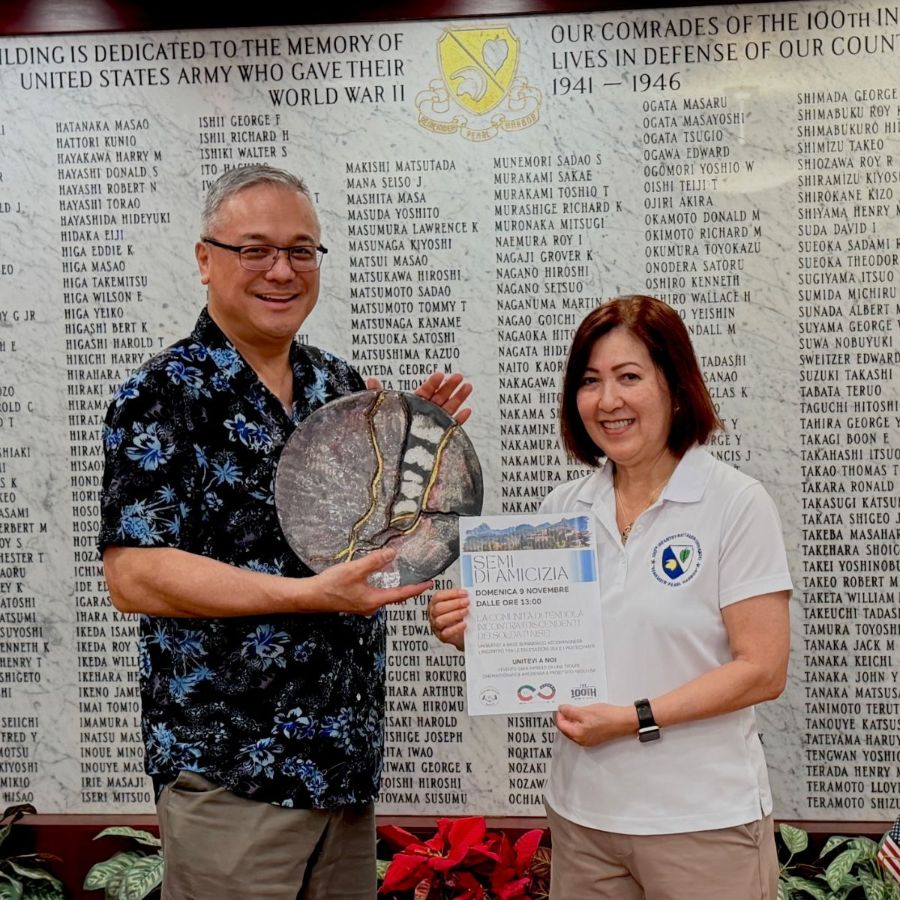
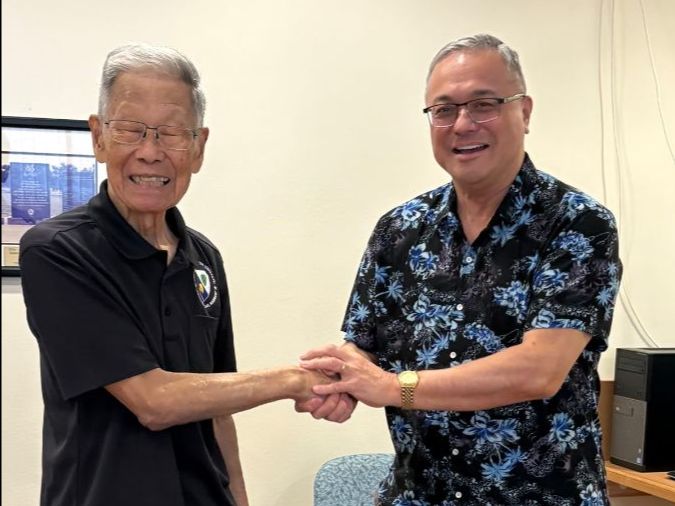
Earlier that day, President High and Mr. Mariano also received an in-depth historical briefing on the 100th Infantry Battalion, presented by Mr. Isami Yoshihara, Club 100’s historian. The briefing highlighted the unit’s distinguished legacy and provided valuable insight into the challenges faced by its members before, during, and after World War II, underscoring the lasting impact of their service.
On January 27, 2026, CDR Ryan Kelly, Commanding Officer, DDG 118 Daniel K. Inouye, Arleigh Burke-class (Flight IIA Technology Insertion) Aegis guided missile destroyer in the U.S Navy and his staff, provided President High, Mr. Mariano, Mr. Iwata, Mr. Nakagawa, Ms. Nakagawa, Ms. Hayashi, and Dr. Tsukamoto a very impressive tour of the destroyer.
Kyle’s Essay about Kenjiro “Ken” Akune
Los Angeles, CA
Written by: Robert M. Horsting
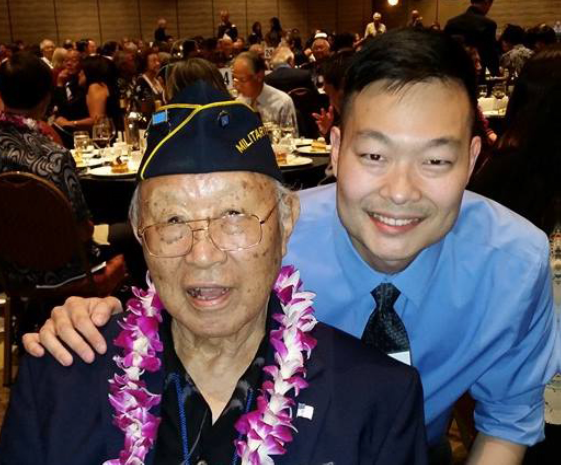
Photo Courtesy of Kyle Choi.
For those among you who have experienced the loss of a parent, and the ritual of looking through the items accumulated over a lifetime (ranging from a beloved chair, an heirloom brooch, and papers documenting the path their lives traveled), you know how this process can be an emotional journey filled with sorrow and joy. A single found letter can provide the details of a challenging moment in your family history, which you might have had some knowledge of, or reveal ties to others whom you were unaware of. A long-forgotten photo can remind you of a personal childhood experience or a story told to you that revealed a moment in your parents’ lives.
While this act can be enlightening, it can also provide some stress (depending on your own mindset in relation to these things) as you ponder what to do with the remaining bits after you, and/or your siblings have done the detailed sorting and collected those items you felt an emotional tie to, or which held the most importance or value. Some might discard what’s left, donate what might be useful to others, or struggle with the decision regarding papers, photos, and correspondence, which might have some historical significance in the right hands.
A while back, Karen Akune invited me to look over the collection of her father’s photos and papers left over from this final stage of sorting. Kenjiro “Ken” Akune was a WWII veteran of the U.S. Army, Military Intelligence Service (MIS).
Among the artifacts were some rather large, beautifully framed photos. One a portrait, another, a posed group of veterans, dressed as if attending an important ceremony. Looking through the papers, I came across a letter-sized envelope marked, “Essay by Kyle,” containing a single page. Kyle Choi, Ken’s grandson, wrote his account of a day he spent with his grandfather, somewhat begrudgingly volunteering his time to do some “busy work,” as Ken and his friends (Tets Asato and George Fujimori, aka The Three Musketeers) shot the breeze and laughed while reminiscing about old times. During a break, Kyle watched a video-recorded interview of his grandfather, revealing a history he knew little about.
Ken was eighteen when Japan launched the attack on Pearl Harbor, HI. He and his older brother, Harry, were in Turlock, CA, while their father had been called back to Japan to oversee the care of a critically ill daughter and attend to his mother and other children, following the passing of his wife about eight years earlier.
In the aftermath of the declaration of war, President Roosevelt signed Executive Order 9066, transforming the entire West Coast into a military security zone over which the U.S. Army had complete authority. Posters were nailed to telephone poles, giving public notice that “aliens and nonaliens” had two weeks to prepare for their evacuation. Ken and Harry (and all people with Japanese heritage living in this zone) were forced to leave behind any property, farm equipment, furniture, and personal belongings they couldn’t sell or carry, as they were sent to an Assembly Center. As American born citizens, the Akune brothers were incarcerated under the euphemistic “non-alien” category.” They were then sent to one of the ten War Relocation Authority camps, which would imprison 125,000 Japanese/Japanese Americans during the course of the war. Ken and Harry were incarcerated at Granada, CO, more commonly known as Amache.
There was much confusion about what the future held in store for all of these Japanese immigrants and their American-born, U.S. citizen children. Many of these immigrants had built a life here over the previous 20 years (and in many cases, nearer to 40 years), with no intention of returning to Japan. Now their allegiance was called into question, which also cast suspicion on their American children’s fitness for military duty when they tried to enlist in the Navy and Army on December 7, 1941, or shortly after. While many felt betrayed and uncertain, for Ken and Harry, there was no confusion as to the action this moment called for. Putting aside the pain and humiliation of incarceration and any inference that they wouldn’t defend the country of their birth, they volunteered to join the U.S. Army, Military Intelligence Service when a recruiter came to Amache looking for young people with Japanese language skills. Some tried to shame them for this decision, saying, “What would your father think?” and “You’re no better than us.” Ken reasoned, “If we don’t show our loyalty now, we’ll always be second-class citizens.”
Both Ken and Harry served in the Pacific theater through the end of the war, where they joined the Japan Occupation troops. They met by chance at Gen. MacArthur’s General Headquarters as the elevator door opened to reveal Harry’s face. It was their first meeting during their tour. Harry had contacted their father and invited Ken to join him for a visit, which included their two younger brothers, who had served in the Japanese military.
Although the war had ended, Ken now faced a home-front battle with racial prejudice as he worked to start a career, family, and provide a home. Some would try to exclude them solely for their Japanese heritage, despite his, and the loyal military service of many Japanese Americans, and for many families, the sacrificed life of a son, brother, husband, or father in that effort.
Having gained some new perspective in learning of Ken’s personal experiences, Kyle wrote the following essay:
It was a perfect Sunday afternoon, and I was forced to help my grandpa volunteer at the Go For Broke World War II Educational Foundation. I was stuck filing old documents and newspapers while he and two other old men were engaging in an intimate conversation. While they sat there talking about the “good old days,” I was hard at work wishing the day would just end. In need of a break, I decided to go to the back room and watch some television. As I made my way there, I searched for a video to watch. All I saw was a box labeled “veteran documentaries.” I rummaged through the box, and to my surprise, I found a tape labeled “Kenjiro Akune,” my grandpa. Filled with curiosity and interest, I popped the tape into the VCR, and what I saw was something that would change my life for the better.
The tape started off with a biographical interview about my grandpa’s life in general. He described the many hardships he went through, and how he dealt with them in order to stay successful in life. However, this part didn’t seem to strike me as deeply as when he informed the interviewer about his younger days. Before he was seventeen, he had to deal with many serious events – the loss of several family members including his mother, baby brother, and two older sisters, a change in culture and lifestyle, when moving from America to Japan and back again, and even enlisting in the United States Army after spending time in a concentration camp.
After all of this, there was one more thing he said that I would never forget: “I had to make the very best of everything that was given to me. I also had to stay optimistic through all of the hardships that occurred during that time of my life. Without that mindset, I don’t think I would be here right now telling you my story.” This concluded about half of the tape, and naturally many thoughts flooded my head.
I honestly never knew the struggles that my grandpa had gone though in the first two decades of his life. By the time my grandpa was my age, he had experienced a great deal of hardships. To know that he has endured loss of family, change in culture, and the horror of war is beyond belief. However, to have experienced that and still have a smile on his face every waking moment makes me have a totally different perspective on life. No longer am I able to complain about petty things, no longer am I able to be lazy in my work, and most importantly, no longer am I able to take a single thing for granted. Compared to my grandpa, I have experienced absolutely nothing worth complaining about, and it has taken me seventeen years to realize that.
I made my way back to my desk and resumed filing the old documents and newspapers. I looked toward the three old men and saw that they were still talking and just enjoying the moment. Reminiscent of the videotape, and what I learned from it, I decided to finish my work with a smile on my face. Three long hours had passed, and not a single complaint came out of my mouth, or into my head for that matter.
It was finally five o’clock and I realized that it was time to go. I looked toward my grandpa and he said, “Hey Kyle, let’s go. I’ll treat you to something to eat since you worked so hard.” I glanced back with a smile, “Grandpa, this time, it’s on me.”
Finding Kyle’s essay was like finding a nugget of gold. As an Oral Historian, it’s my goal and responsibility to pass on the personal stories that have been shared with me. The most precious of these stories is when a veteran (or any interviewee) finds that moment of comfort or timing to share a particular experience for the first time. Many veteran family members are surprised to learn that their father agreed to an interview, only learning of it when they discovered a VHS tape or DVD while sorting through their belongings, following their passing. I’m very happy to read that Kyle was able to learn Ken’s history while still able to talk with Ken and ask for more details about life in those days of the past. I’m more excited by the fact that Kyle had time to express his reverence and respect for all that Ken and his wife, Alice, had endured and accomplished in order to provide Kyle a life where his choices would only be limited by his personal ambition and drive to accomplish his dreams.
—30—
©2025 Robert M. Horsting – Printed in the Nichi Bei newspaper, 01/08/2026. Updated – 01/15/2026
*This article was republished with permission from Robert M. Horsting *
JAVA Bylaws Revision Announcement
Washington, D.C.
Written by: JAVA EC
The Japanese American Veterans Association (JAVA) is committed to transparency, accountability, and member participation in the governance of our organization. In that spirit, we are writing to inform our General Members and War Veteran Members of proposed revisions to the JAVA Bylaws that will be presented at our upcoming Annual General Membership Meeting (AGM).
At the AGMM on February 7, the floor will be formally opened for members to ask questions, raise concerns, and respectfully challenge the proposed revised Bylaws prior to any action being taken.
The proposed revisions serve two primary purposes:
- Clarification and modernization of existing bylaws that have been identified as unclear, outdated, or open to multiple interpretations.
- Structural updates, including the addition of Regional Vice Presidents to better represent our geographically diverse membership, along with the establishment of regional budgets to support programming, outreach, and member engagement at the local level.
These changes are intended to strengthen JAVA’s ability to serve its members nationwide while honoring the legacy and voices of our veterans.
We look forward to your input and to a thoughtful, respectful discussion on February 7.
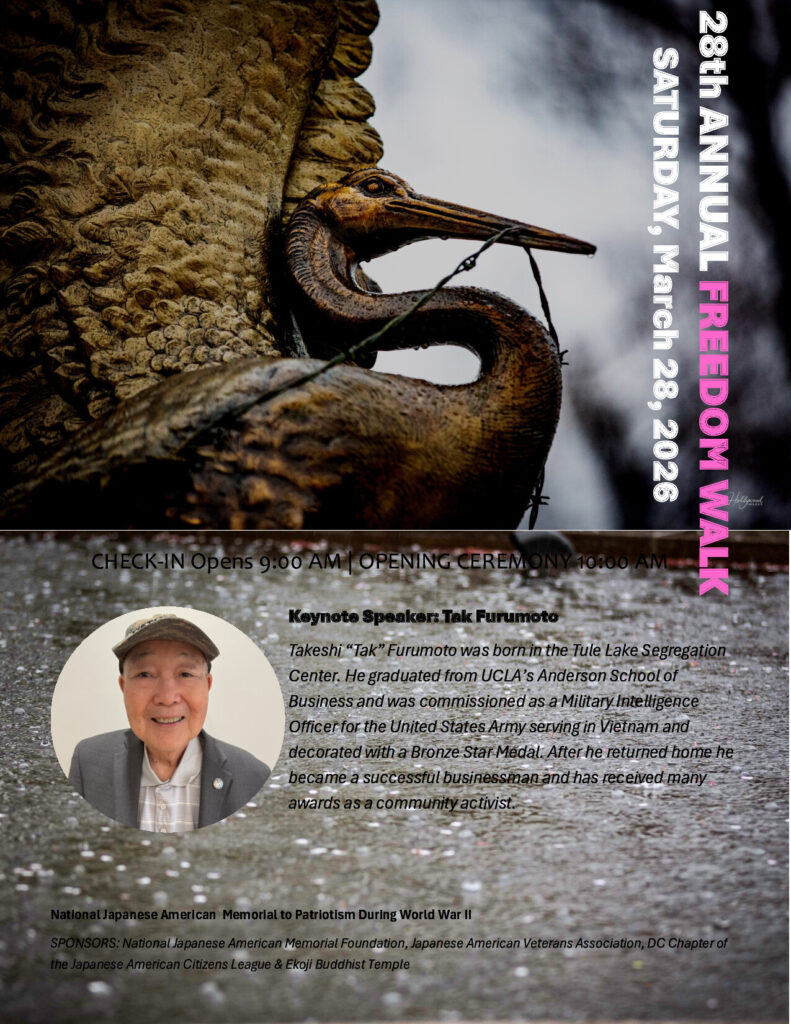
28th Annual Freedom Walk
2026 Day of Affirmation Preview and Seeking Support
Washington, D.C.
Written by: Bob Vokac, JAVA EC
The 80th Anniversary of the Day of Affirmation will be commemorated on Saturday, July 18, 2026, in Washington, D.C. This milestone anniversary offers us a rare and meaningful opportunity to honor history, service, and sacrifice on a truly national stage. At a time when the values of loyalty, citizenship, and constitutional principles continue to be tested, the Day of Affirmation reminds us of the courage it took for Japanese Americans to stand for those ideals even when their own rights were denied.
Our plans for this year’s observance are ambitious and exciting. The event will include a short parade, a public ceremony on the White House Ellipse, bands, military units, distinguished guest speakers, honored VIPs, and a picnic-style luncheon. It promises to be a memorable day of remembrance and celebration.
To bring this vision to life, we need your help. This event will only succeed through the dedication and generosity of volunteers. Whether you can assist with planning, logistics, day-of support, or behind-the-scenes coordination, there is a place for everyone — and no experience is needed. Volunteers will play a vital role in making this historic anniversary possible.
If you are interested in volunteering, please contact our Volunteer Coordinator, Bob Vokac, at [email protected]. To assist with planning, we kindly ask that interested volunteers reach out no later than February 13, 2026.
In addition, ambitious plans require adequate funding. We are seeking a member willing to take the lead on fundraising, with the goal of securing corporate sponsorships to help offset event costs. The fundraising lead will work closely with President High to develop and carry out a clear, achievable strategy.
If you have questions or would like to discuss how you can help, please contact President High, Bob Vokac, or Antoinette Phelps at [email protected]. Together, we can ensure that the legacy of the Day of Affirmation is not only remembered but powerfully carried forward for future generations.
Upcoming JAVA Events

Saturday, February 7, 2026. Annual General Membership Meeting (AGM) and annual awards ceremony. Virtual 2PM EST / 11AM PST / 9AM HST.
Saturday, Mar 28, 2026. 28th Annual Freedom Walk. Japanese American Memorial to Patriotism During World War II, Washington, D.C.
Sunday, May 24, 2026. 78th Annual Memorial Day Service. Arlington National Cemetery.
Saturday, July 18, 2026. 7th Annual Day of Affirmation. The Ellipse, Washington, D.C.